Essay
The Return of the Author
AI scales fluency. Authors supply accountable judgment.

Richard M. Murphy
·

Until recently, fluent writing was a reasonable proxy for thought. A persuasive essay, shareholder letter, or strategic memo usually suggested that an identifiable human had wrestled with the logic and evidence before applying their byline.
Generative AI has broken that inference. On LinkedIn, in executive communications, and across the wider market, readers can no longer assume that fluent writing reflects considered judgment.
We no longer ask, “Is this well written?” Everything is well written because everyone has access to the same models. The more urgent question becomes: “Who thought this through, and who is willing to stand behind it?”
This is one reason why authorship matters more in the AI era, not less. An author’s name is more than an attribution. It tells readers who exercised the judgment and who is prepared to take responsibility for it.
The second reason is that authorship can do more than allocate responsibility. Sometimes it creates new ways of thinking that outlive the original text. One of the clearest examples comes from U.S. diplomatic history.
Kennan’s Long Telegram
In February 1946, George F. Kennan, the senior U.S. diplomat in Moscow, wrote what became known as the Long Telegram. He urged Washington to resist Soviet expansion through a patient, sustained strategy of containment rather than direct military confrontation. A year later, writing anonymously as “X” in Foreign Affairs, Kennan brought his containment doctrine to a wider audience and laid out the strategic logic behind it.
Over time, containment became a frame for thinking about how the United States should respond to geopolitical pressure from other states. The debate shifted from a single prescription to a set of strategic questions: where containment should apply, which instruments it required, and how the approach should adapt as circumstances changed.
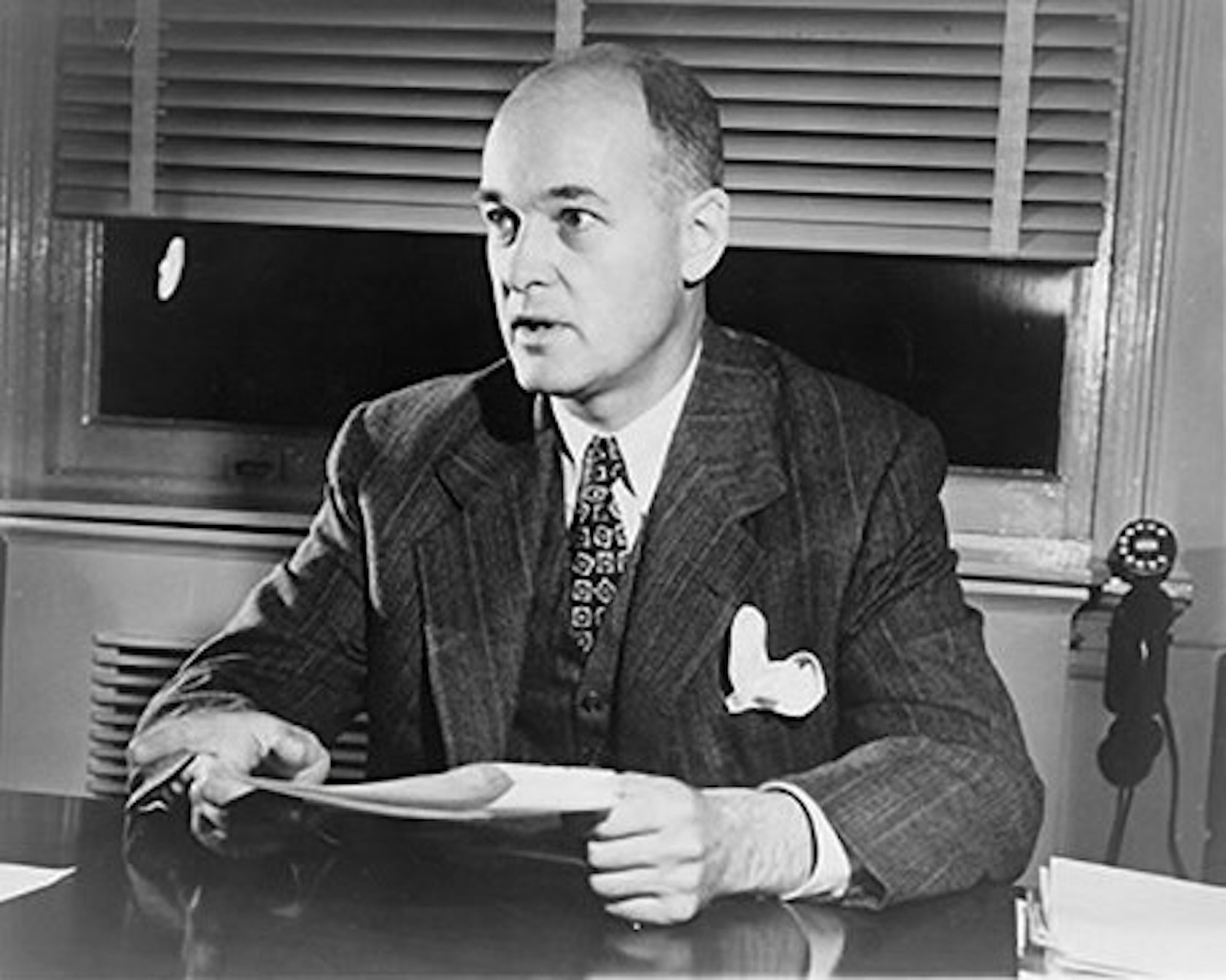
George F. Kennan
My late father, Richard W. Murphy, belonged to the generation of American diplomats that inherited Kennan’s frame. He and his colleagues didn’t spend their careers quoting the Long Telegram. They used containment theory to organize judgment about situations Kennan could not have foreseen.
In the late 1990s, for example, my father directed a Council on Foreign Relations task force that advanced a policy of “differentiated containment” toward Iran and Iraq. The phrase itself captured the process: an established strategic frame adapted to address a new foreign policy challenge by distinguishing between two different regimes.
In short, Kennan did more than produce two influential documents. He developed an intellectual framework that later generations could apply to problems the original work never addressed. His achievement raises a new issue: once an idea escapes its original context, does its author retain any authority over what it comes to mean?
What authors do
In the late 1960s, literary theorists began asking a deceptively simple question: What is an author? Roland Barthes declared the “death of the author” in 1967, rejecting the idea that a text’s meaning was determined by its creator’s intentions.
Two years later, Michel Foucault posed a key question for the AI era: What does calling someone the author tell us about the work? His answer: authorship is an organizing principle that locates responsibility, connects individual works into a recognizable body of thought, and shapes how readers interpret new claims.
That definition explains why collaboration does not erase authorship. Presidents deliver speeches drafted with teams of advisers. CEOs publish articles shaped by researchers, editors, communications specialists, and lawyers. Celebrity memoirs are usually produced by ghostwriters. The crucial question is not who drafted each sentence, but who exercised judgment over the work and stands behind the final product.
Traditional ghostwriting separated authorship from keyboard use without separating it from judgment. The writer drew out, organized, and clarified someone else’s thinking. The named author remained responsible for the arguments, evidence, and conclusions.
AI changes the economics of that arrangement. It can automate not only composition but much of the apparent reasoning that precedes it. A named author can now approve a polished argument without having supplied the experience, distinctions, or decisions that give it substance.
Judgment > fluency
That gap is easy to miss because AI is so fluent. Its sentences display confidence, structure, transitions, and rhetorical balance. They reproduce many of the surface qualities readers have historically associated with careful thought.
But fluency is not judgment, much less accountability. A language model can produce a persuasive argument without being accountable for whether it is true. It can summarize competing views without deciding which evidence deserves greater weight. It can recommend a course of action without bearing responsibility for the consequences.
Authorship is a mechanism for accountability.
As a result, the question “Was this written by AI?” is rarely just about production. Readers are asking who exercised the judgment. Did the named author wrestle with contradictory evidence? Reject an easy conclusion? Decide which uncertainties to acknowledge and which claims to defend? Or was a familiar name simply attached to machine-generated output?
Trust now depends less on polished prose than on the visible relationship between judgment, evidence, decisions, and consequences. That’s why authorship remains indispensable in fields where the work is intensely collaborative.
For example, Supreme Court opinions are shaped by clerks, colleagues, and institutional process, yet the justice's name identifies who stands behind the ruling. Scientific papers may involve dozens of contributors, but the author list still answers a basic question: Who can defend these methods and findings?
Authorship is not only about credit. It is a mechanism for accountability.
We, the author
The same logic applies to companies. For many years, organizations invested in blogs, white papers, podcasts, research, and executive platforms on the assumption that more content would create more authority and, ultimately, drive more business.
In the AI era, that assumption breaks down. Fluency is abundant. What remains scarce is evidence that a coherent body of judgment exists behind what an organization says and does. That requires more than a content strategy. It requires authorship.
A frame is judgment made portable.
A company becomes an author when its research, products, operating decisions, public claims, and leaders reveal a recognizable method of interpretation. Its ideas do more than recur. They help audiences distinguish what matters, anticipate what comes next, and evaluate new evidence.
The market can then test that judgment against the company’s choices and results. Does the organization apply its principles even when the decision is costly in terms of financial or reputational capital? Does its evidence withstand scrutiny? Does its view of the market help customers make better decisions? Do its products embody the same understanding expressed in its public claims?
Over time, the company develops more than a recognizable voice. It develops a recognizable standard of judgment.
Judgment to go
A frame is judgment made portable. It allows customers, investors, employees, analysts, journalists, and competitors to apply an organization’s way of seeing to situations the original author never addressed.
The frame begins to travel independently of any single publication. It generates new questions, organizes disagreement, and helps the market make sense of change. The goal is not to publish more than competitors. It is to create a body of judgment coherent enough to guide decisions, strong enough to survive scrutiny, and useful enough for others to think with.
AI has not made authorship obsolete. It has revealed what authorship was for: identifying the person or institution willing to stand behind the judgment expressed in the work.
We have not entered an age without authors. We have rediscovered why authors mattered all along. The next frontier is learning how to capture, distribute, and compound expert judgment when verbal fluency is abundant. This will be a defining strategic question of the AI era.
How we use AI
Walled City uses AI as part of its editorial process—the same human-led approach we use to help clients build market authority at scale. We deploy AI as a tool for ideation, research and drafting. Our essays draw on original reporting, proprietary data, experience, sustained revision, and human verification. Walled City remains fully responsible for the ideas, judgment, accuracy, and final work.


